
OEM vs Aftermarket Parts for a Chevy Silverado | Guide
Chevy Silverado Parts Guide
Are OEM or Aftermarket Parts Better for a Chevy Silverado?
OEM parts are factory-original components made to match a Chevy Silverado’s exact build, while aftermarket parts are produced by third-party manufacturers and may vary in fit and quality. OEM parts offer the highest accuracy and consistency—especially when verified by VIN—while aftermarket parts can be cheaper but carry greater fitment and durability risk.
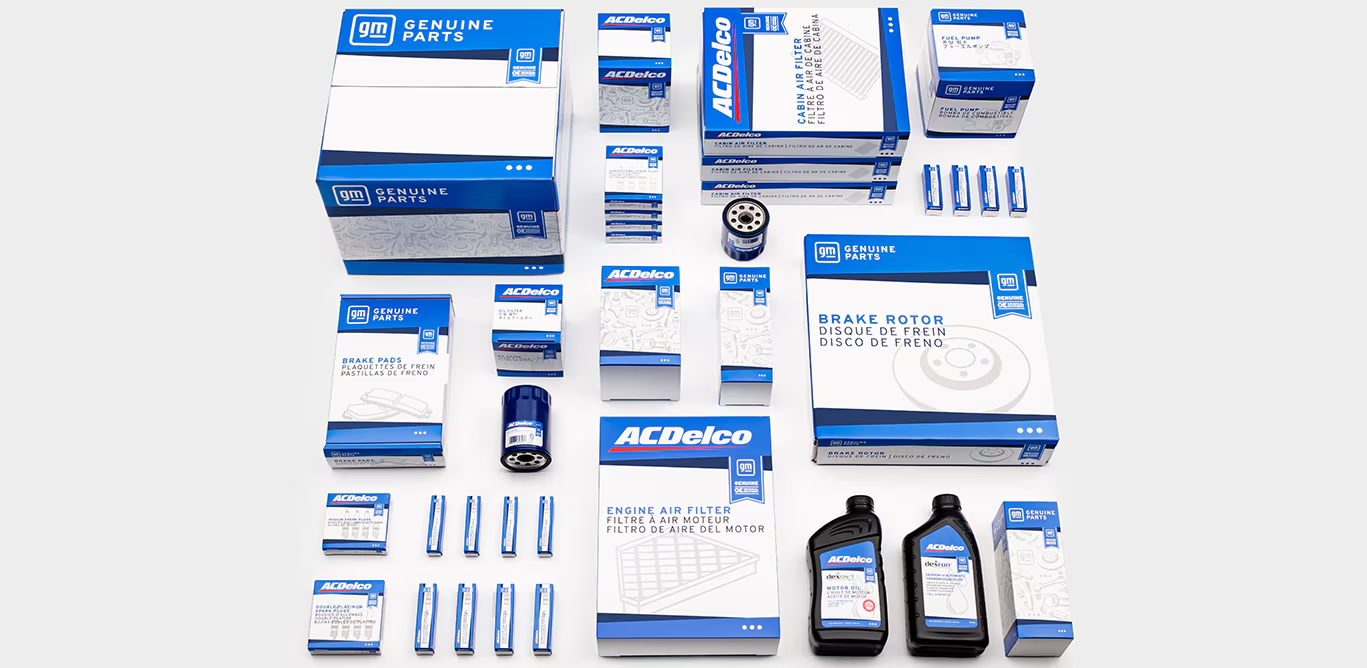
Why the OEM vs Aftermarket Choice Matters for Silverado Owners
The Chevy Silverado is produced across multiple generations, trims, engines, and drivetrain configurations, with frequent mid-year changes. Small differences in build can affect fitment, sensor behavior, and long-term performance. Choosing between OEM and aftermarket parts isn’t just about price—it directly impacts accuracy, reliability, and ownership experience.
When OEM Parts Are the Better Choice
Best for
Owners who prioritize exact fitment, long-term reliability, and fewer installation issues.
Why this option exists
OEM parts are engineered by GM to match Silverado-specific tolerances, materials, and performance requirements. When verified by VIN, these parts align with the truck’s original configuration, including engine type, drivetrain, trim level, and production changes.
When it’s not a good fit
OEM parts may not be necessary for cosmetic items, older vehicles with limited remaining lifespan, or situations where budget is the primary concern.
When Aftermarket Parts Can Make Sense
Best for
Budget-conscious repairs, cosmetic upgrades, or non-critical components.
Why this option exists
Aftermarket manufacturers offer alternatives at various price points and, in some cases, design variations not found in factory parts. This can provide flexibility for owners looking to reduce upfront cost.
When it’s not a good fit
Critical systems—such as braking components, sensors, electronics, and drivetrain parts—where small variances can cause warning lights, performance issues, or premature wear.
Fastest way to prevent wrong-part orders
Silverado catalogs can look “right” by year and model but still miss trim, engine, drivetrain, and mid-year build changes. VIN verification is the safest path when accuracy matters.
If You Care Most About Fitment Accuracy
Best for
Silverado owners ordering parts online without physical inspection.
Why this matters
OEM parts paired with VIN verification account for engine, drivetrain, trim, and mid-year changes. Many aftermarket catalogs rely on generalized year/make/model matching, which can overlook important variations.
When it’s less important
Universal-fit accessories or purely cosmetic parts where precision tolerances are not required.
If Long-Term Reliability Matters Most
Best for
Daily drivers, work trucks, towing setups, and high-mileage Silverados.
Why OEM performs better
OEM parts are tested to GM durability standards and designed to integrate cleanly with existing systems, reducing compatibility issues and premature failure.
When aftermarket may suffice
Short-term repairs or vehicles nearing end-of-life where longevity is not a primary concern.
If Resale Value Is a Priority
Best for
Owners planning to sell or trade in their Silverado.
Why OEM helps
Factory-original parts help preserve vehicle integrity and reduce buyer concerns during inspections, especially for shoppers familiar with OEM service history.
When resale impact is minimal
High-mileage or dedicated work trucks where resale expectations are already low.
OEM vs Aftermarket Parts Comparison
The table below compares OEM and aftermarket Silverado parts across the most important decision criteria.
| Decision Factor | OEM Parts | Aftermarket Parts |
|---|---|---|
| Best for | Exact fit, long-term reliability | Budget repairs, cosmetic use |
| Fit accuracy | VIN-verified, factory exact | Varies by brand and catalog |
| Reliability | Built to GM durability standards | Depends on manufacturer |
| Price range | Higher upfront cost | Often lower upfront cost |
| Key tradeoff | Cost vs precision | Savings vs inconsistency |
Explore Chevy Silverado Parts
Use the links below to continue your research or move into shopping:
FAQs
OEM vs Aftermarket Chevy Silverado Parts FAQs
Short answers first, with a deeper explanation inside each accordion.
Are OEM parts really better for a Chevy Silverado?
OEM parts are built to match a Chevy Silverado’s original factory specifications for more consistent fit and performance.
OEM parts are engineered by GM to match the Silverado’s design, materials, and tolerances. When paired with VIN verification, they align with the truck’s engine, drivetrain, trim level, and production details, reducing installation issues, warning lights, and long-term reliability concerns compared to many aftermarket alternatives.
Why are OEM parts usually more expensive?
OEM parts cost more because they include factory engineering, testing, and quality control.
The higher price reflects GM’s design standards, durability testing, and tighter manufacturing tolerances. While the upfront cost is higher, OEM parts often reduce labor issues, repeat repairs, and premature failures—making them a more predictable long-term choice for Silverado owners.
Can aftermarket parts cause problems on a Silverado?
Yes—poorly matched aftermarket parts can cause fitment issues, warning lights, or reduced performance.
Aftermarket parts vary widely in quality and fitment accuracy. On a Silverado, this can lead to sensor errors, improper installation, or compatibility issues—especially in electronic, braking, and drivetrain systems. Risk increases when parts are selected without VIN-level confirmation.
Do aftermarket parts ever outperform OEM parts?
Some aftermarket parts offer performance enhancements, but results depend heavily on brand and application.
Certain aftermarket manufacturers design parts aimed at performance or customization, which may exceed OEM specifications in specific use cases. These options require careful research and are best suited for experienced owners who understand the tradeoffs in fitment, warranty, and long-term reliability.
Is VIN verification important when choosing parts?
Yes—VIN verification is the most accurate way to confirm parts compatibility for a Chevy Silverado.
VIN verification accounts for engine type, drivetrain, trim level, and mid-year production changes that basic year/make/model searches can miss. OEM parts integrate VIN data most reliably, helping ensure the part ordered matches the truck’s exact configuration and reducing incorrect orders.
Which Silverado parts should always be OEM?
Brakes, sensors, electronics, and engine components are safest when purchased as OEM.
Parts that directly affect safety, system communication, or engine performance are best sourced as OEM. These components must meet strict tolerances and integrate seamlessly with factory systems, making OEM parts the most reliable option for braking, electronic sensors, engine components, and critical drivetrain systems.